

If you have ever stood in the garden tool aisle staring at two loppers that look almost identical — same handle length, similar price, completely different blade design — you have run into the bypass vs anvil question.
It sounds like a minor detail. It is not. The blade design determines what the lopper does well and what it damages. Pick the wrong type for your garden, and you will either struggle through cuts that should be easy, or end up with crushed stems that invite disease into your plants.
This guide explains exactly how each type works, what each one is best for, and how to match the right lopper to your garden.
How Bypass Loppers Work
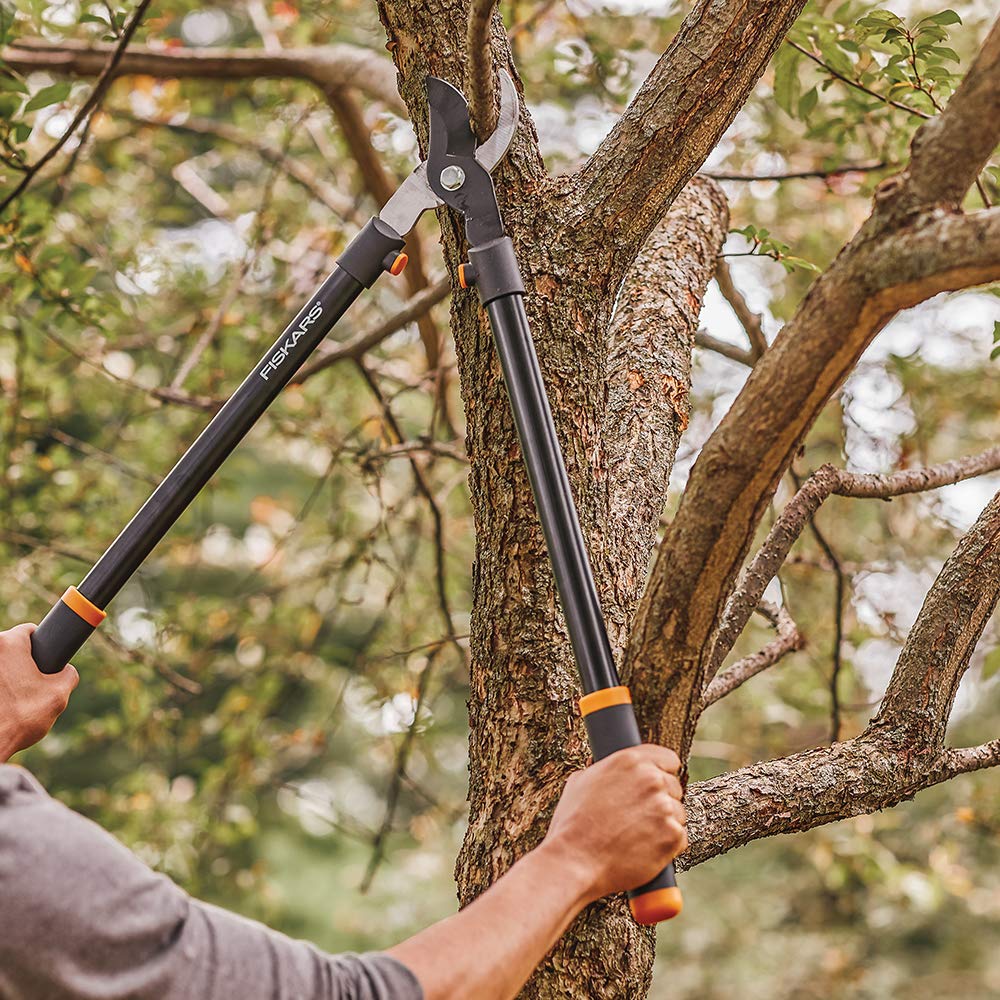
A bypass lopper has two curved blades that pass each other in a scissors-like action. One blade is sharp and does the cutting. The other is a curved counter-blade that guides the branch and supports the cut.
The key is that the blades never meet — they slide past each other with a tight clearance. This shearing motion severs the branch cleanly, without crushing or compressing the plant tissue on either side of the cut.
The result is a smooth, precise cut surface that heals quickly and minimizes the open wound where disease can enter. For live, growing plants, this matters. A clean cut on a healthy branch closes over in days. A crushed or torn cut can take weeks and is far more vulnerable in the meantime.
As the University of New Hampshire Extension explains, bypass pruners and loppers are best used on living branches because they make clean, close cuts that heal faster — while anvil designs are not recommended for live wood because they crush stems.
Bypass loppers are the standard choice for most garden pruning precisely because most garden pruning involves live wood.
How Anvil Loppers Work
An anvil lopper has a single straight blade that closes against a flat anvil — a wide, blunt platform on the lower jaw. The branch is placed between blade and anvil, and the blade drives down through the branch until it meets the flat surface below.
The cutting action is more like a chopping motion than a shearing one. This gives anvil loppers significantly more mechanical force per unit of hand effort — which is why they excel at cutting thick, dense, or hard material that would require too much force from a bypass design.
The trade-off is cut quality. Because the anvil compresses the branch as the blade descends, the lower half of the cut surface is slightly crushed. On deadwood or dry branches, this does not matter. On live, actively growing wood, the crushing can damage plant tissue and slow healing.
According to West Virginia University Extension, anvil loppers are good for dead wood removal but are not suitable for cutting into living tissue since they smash and damage the plant material rather than producing a clean cut.
Bypass vs Anvil: Side-by-Side Comparison
| Factor | Bypass Loppers | Anvil Loppers |
|---|---|---|
| Blade design | Two curved blades that pass each other | Single blade closes against flat anvil |
| Cut quality | Clean, smooth, minimal tissue damage | More compression on lower cut surface |
| Best material | Live, green wood | Deadwood, dry branches, tough hardwood |
| Cutting force required | Moderate | Less — anvil multiplies mechanical advantage |
| Branch capacity | Up to 2" on quality models | Up to 2.5" on heavy-duty models |
| Plant health impact | Minimal — clean cuts heal fast | Higher on live wood — crushed tissue heals slower |
| Blade maintenance | Sharpen regularly for best results | Easier to maintain — single blade |
| Best for | Roses, shrubs, fruit trees, live wood | Deadwood removal, dry branches, renovation pruning |
When to Use Bypass Loppers
Bypass loppers are the right choice for the majority of garden pruning situations. Any time you are cutting live, actively growing wood — branches that are still green and flexible — bypass is the better design.
Fruit trees: Clean cuts on fruit trees reduce the entry point for fungal disease and bacterial infection. Bypass loppers leave a smooth wound that the tree's natural healing process can close efficiently. On a mature apple or pear tree, the difference between a clean bypass cut and a crushed anvil cut is visible in how quickly the callus tissue forms over the wound.
Roses: Rose canes are soft wood with a hollow center. A bypass lopper cuts through them without splitting or crushing the cane walls. Anvil pressure on soft rose canes can collapse the hollow center and damage tissue further down the stem than the cut itself.
Ornamental shrubs: Hydrangeas, camellias, forsythia, and similar ornamental shrubs all benefit from the clean cut quality of bypass loppers. These are plants where visible cut marks on prominent branches affect the look of the plant.
Spring and summer pruning: Any time you are pruning during the active growing season — removing crossing branches, shaping growth, or cutting back after flowering — bypass loppers are the correct tool. The plant is actively directing energy to heal pruning wounds, and a clean cut gives it the best start.
Branches up to 2 inches: Quality bypass loppers handle branches up to 2 inches in diameter. Within that range on live wood, bypass is almost always the right choice.
When to Use Anvil Loppers
Anvil loppers come into their own in specific situations where cutting force matters more than cut quality — primarily deadwood, dry branches, and renovation work.
Dead and dry branches: Deadwood does not heal. There is no plant tissue to damage, no wound to close, no disease entry point to minimize. What matters is getting through the dense, hardened wood with as little effort as possible. Anvil loppers are significantly easier to use on dry deadwood than bypass designs.
Storm damage cleanup: After a storm, you are often dealing with broken, partially dry, or heavily damaged branches. These are not situations where cut quality matters — the branch is already damaged. Anvil loppers get through the material faster and with less hand fatigue.
Renovation pruning on neglected plants: Overgrown shrubs and trees that have not been pruned in years often have thick, dense, woody growth that is partially or fully deadwood. Anvil loppers are the practical choice for this kind of heavy clearance work.
Ratchet anvil loppers for thick branches: Ratchet anvil loppers add a mechanical ratcheting system that allows you to cut through a thick branch in incremental steps — ratchet, release, ratchet, release — rather than requiring one continuous squeeze. For branches at the upper limit of your lopper's capacity, a ratchet anvil design makes the cut possible without extreme hand force.
The Compound Action Advantage
Some anvil loppers — and a few bypass models — add a compound action mechanism. Instead of a single pivot point, compound loppers use a series of linked pivot points that multiply the mechanical force applied at the handles.
The result is that a compound action lopper requires significantly less hand force to cut the same branch as a standard lopper. This is particularly valuable for gardeners with arthritis, reduced grip strength, or anyone doing extended pruning sessions where cumulative hand fatigue becomes an issue.
The GARTOL Anvil Lopper with Compound Action uses this multi-pivot system to cut branches up to 2 inches with dramatically reduced effort — useful for thick deadwood and renovation work where a standard anvil lopper would require hard squeezing.
Handle Length and Reach: What the Numbers Mean
Lopper handle length affects both reach and leverage. Longer handles give you more reach for high branches — and more leverage, which makes cutting easier. The trade-off is weight and maneuverability in tight spaces.
Fixed-length loppers (26"–30") are the standard for most garden maintenance. They are easier to control in dense shrubs and work well for branches at chest height and below.
Telescopic loppers extend the range significantly. The GARTOL Telescopic Bypass Lopper extends from 26" to 35", and the Telescopic Anvil Lopper extends from 28" to 41". This lets you reach branches several feet above your head without a ladder, and then compress back to a shorter length for closer work.
For most home gardeners, a telescopic lopper covers both situations — extend for high branches, compress for standard pruning — without needing two separate tools.
GARTOL Lopper Recommendations
For Live Wood and General Garden Maintenance
GARTOL 30" Heavy-Duty Bypass Lopper
SK5 steel blade with anti-rust coating, serrated edge for clean cuts through thick live branches, lightweight aluminum alloy handles at only 1.1kg, TPR non-slip rubber grips. Cutting capacity up to 2 inches on live branches. The right tool for fruit trees, roses, and ornamental shrubs.
Shop the GARTOL 30" Bypass Lopper
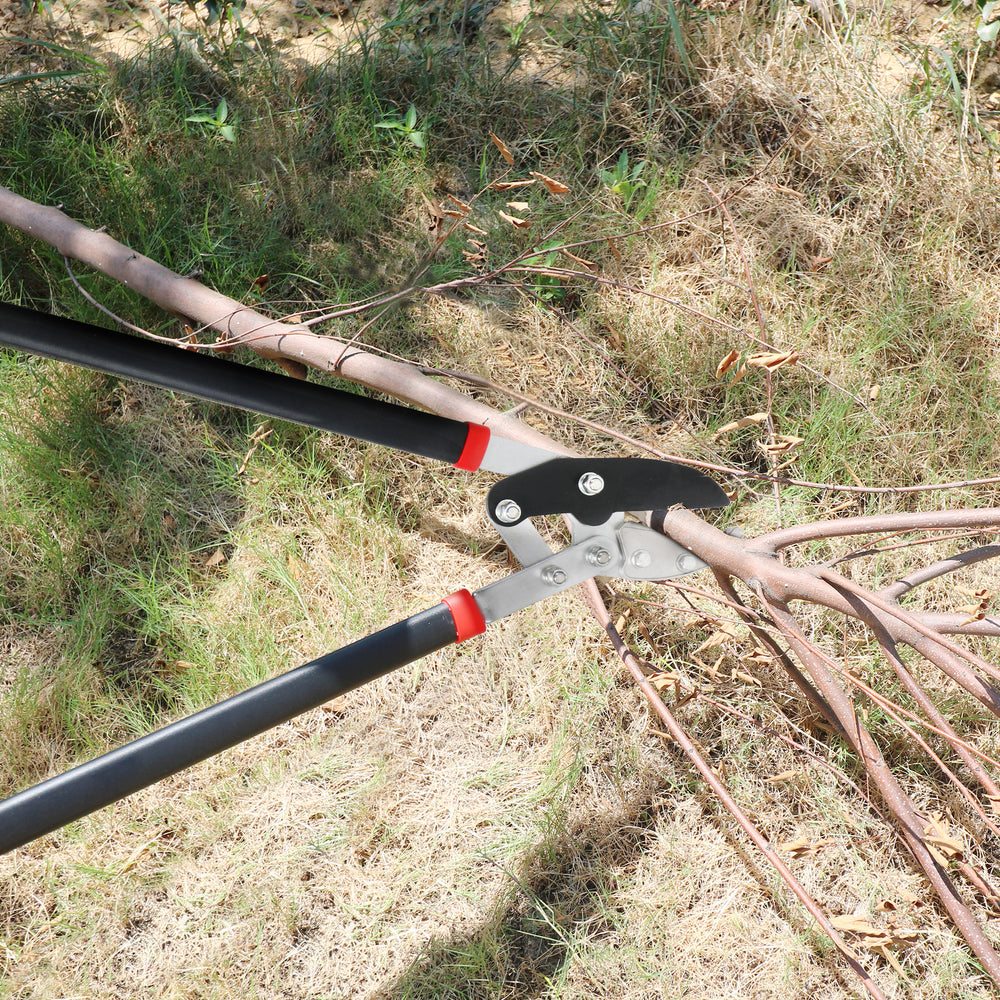
GARTOL Telescopic Bypass Lopper 26"–35"
Heat-treated blade with Teflon coating prevents sap buildup and rust. Extends from 26" to 35" for high branches without a ladder. Ergonomic non-slip grip, suitable for home gardeners and professional arborists alike.
Shop the GARTOL Telescopic Bypass Lopper
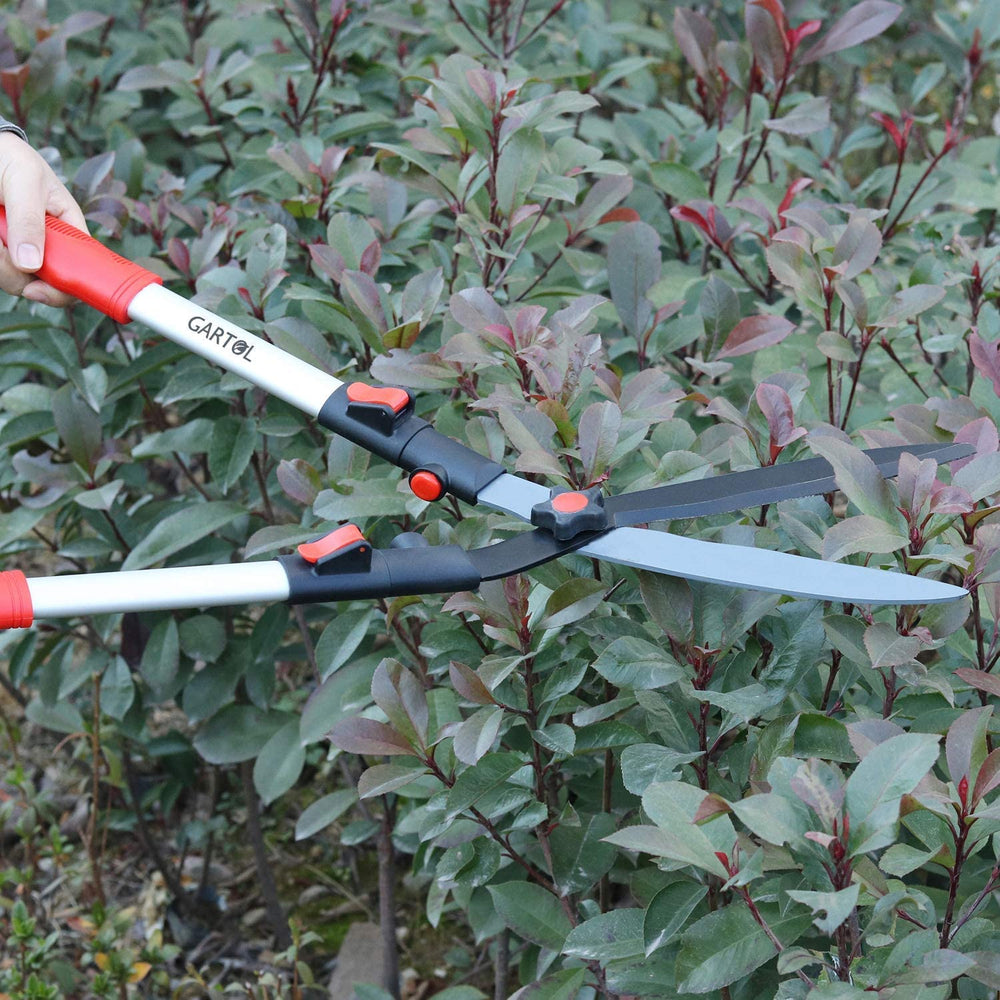
GARTOL 28" Professional Bypass Lopper
SK5 high-carbon steel blade, 1.5" cutting capacity, shock-absorbing bumpers and non-slip grips for extended pruning comfort.
Shop the GARTOL 28" Professional Bypass Lopper
For Deadwood, Dry Branches, and Heavy Clearance Work
GARTOL Anvil Lopper with Compound Action 29"
High-carbon steel blade with Ilaflon protective coating, compound lever system with multiple pivot points for effortless cutting on thick deadwood and dry branches. Cuts up to 2 inches. Triangular iron tube handles for rigidity under heavy force.
Shop the GARTOL Compound Action Anvil Lopper
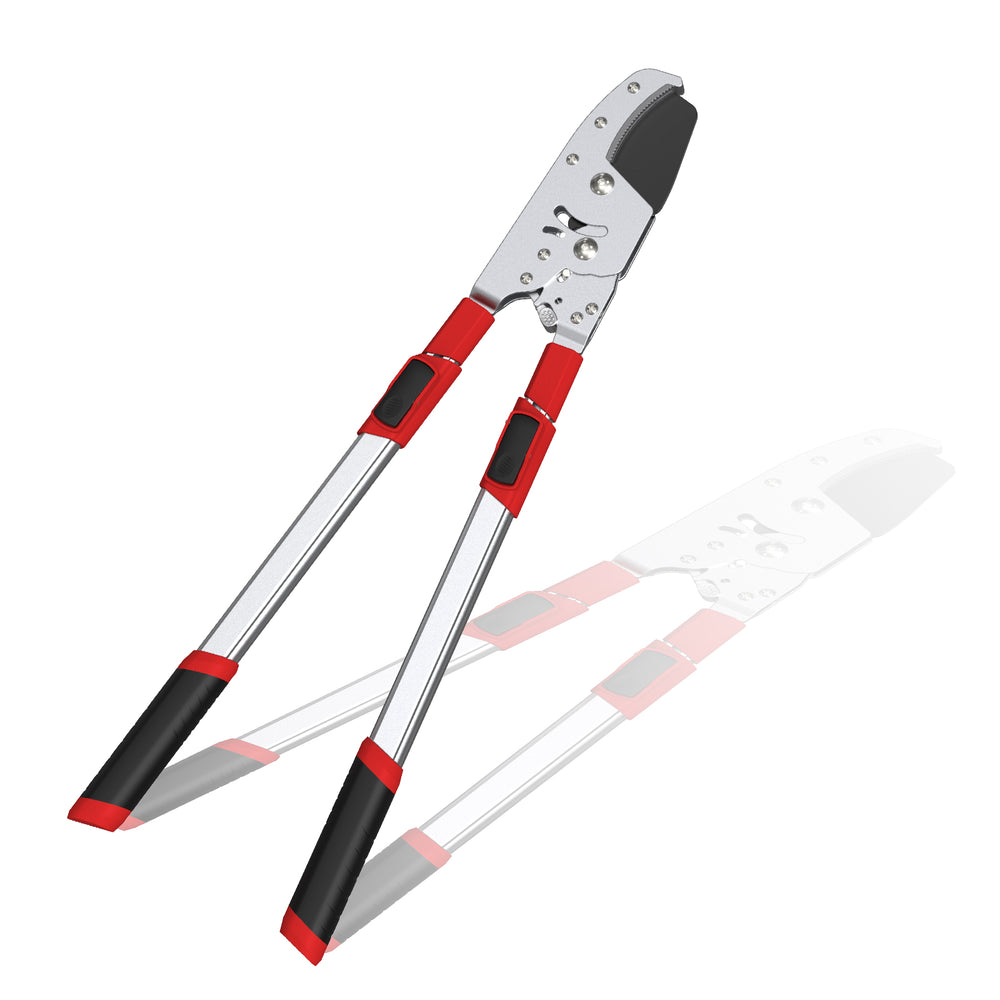
GARTOL Telescopic Ratchet Anvil Lopper 28"–41"
Ratchet mechanism cuts thick branches in incremental steps — ideal for branches at the upper limit of capacity or for gardeners with reduced hand strength. Extends from 28" to 41" with 6 pin-locked positions. 2–2.5" cutting capacity on dry wood.
Shop the GARTOL Telescopic Ratchet Anvil Lopper
For the Complete Pruning Kit
GARTOL 3-Piece Garden Tool Set
Includes telescopic bypass loppers (26"–38"), hedge shears (24"–30"), and bypass pruning shears — everything needed for complete garden maintenance in one purchase. Non-stick coated blades, aluminum telescopic handles, non-slip grips throughout.
Shop the GARTOL 3-Piece Garden Tool Set
Quick Decision Guide
| Your situation | Best choice |
|---|---|
| Pruning roses, shrubs, ornamental plants | Bypass lopper |
| Cutting fruit trees — apples, pears, citrus | Bypass lopper |
| Removing dead branches and dry wood | Anvil lopper |
| Storm damage cleanup | Anvil lopper |
| Renovation pruning on neglected shrubs | Anvil lopper |
| Thick branches, reduced hand strength | Ratchet anvil lopper |
| High branches without a ladder | Telescopic lopper (bypass or anvil) |
| Mixed garden with live and dead wood | Bypass for regular maintenance + anvil for heavy clearance |
FAQ
Which is better for roses — bypass or anvil loppers?
Bypass loppers are the right choice for roses. Rose canes are soft live wood, and a bypass lopper's clean shearing cut minimizes tissue damage and promotes faster healing. Anvil pressure can crush the hollow cane walls and damage tissue below the cut line.
Can I use bypass loppers on deadwood?
Yes, but anvil loppers are easier. Bypass loppers work on deadwood, but the cutting force required is higher than on live wood. For occasional deadwood removal, a bypass lopper is fine. For heavy deadwood clearance or renovation pruning, an anvil lopper requires noticeably less hand effort.
Can I use anvil loppers on live plants?
For light maintenance, yes. For plants where cut quality matters — fruit trees, roses, ornamentals — bypass is the better choice. Anvil compression on live wood causes more tissue damage and slower healing than a bypass cut.
What cutting capacity do I need?
For most home garden pruning — roses, ornamental shrubs, young fruit trees — a 1.5"–2" cutting capacity covers everything. For mature fruit trees or renovation work on old overgrown shrubs, look for models rated at 2"–2.5".
What is the difference between ratchet and compound action loppers?
Ratchet loppers cut in incremental steps — you squeeze, release slightly, and the ratchet holds the position, then squeeze again. Useful for branches at the upper limit of capacity. Compound action loppers use multiple pivot points to multiply force on a single continuous squeeze. Both reduce the hand effort required, but they work differently. For very thick branches, ratchet gives you more control. For general heavy pruning, compound action is smoother.
How do I know if a branch is too thick for my loppers?
If you have to strain hard and the handles flex, the branch is at or beyond the tool's capacity. Forcing loppers beyond their rated capacity damages the blade and the pivot mechanism. For branches that exceed lopper capacity, a pruning saw or pole pruner is the right tool.
How do I maintain loppers for longevity?
Wipe the blades clean after every use — sap and resin buildup increases cutting friction and accelerates rust. Apply a light coat of oil to the blade surface before storage. Check and tighten the pivot bolt periodically. Sharpen bypass blades when cut quality drops. For more on tool maintenance, the University of Minnesota Extension recommends cleaning and disinfecting blades between plants to prevent spreading disease, especially when working across multiple trees or shrubs in the same session.
Do I need both bypass and anvil loppers?
For most home gardeners, a quality bypass lopper handles 90% of pruning situations. Add an anvil lopper only if you regularly deal with significant amounts of deadwood or old overgrown growth. The 3-piece GARTOL set gives you bypass loppers plus pruning shears for a complete kit — the right starting point for most gardens.
The Bottom Line
For most home gardens — roses, shrubs, fruit trees, and general maintenance — bypass loppers are the right choice. The clean cut quality protects plant health and matters on every live branch you cut.
Anvil loppers earn their place for deadwood, storm cleanup, and renovation work on neglected plants. If you regularly deal with thick dry branches, the reduced hand effort of a ratchet anvil design is worth having.
When in doubt, start with a quality bypass lopper. You can always add an anvil model later for heavy clearance work. For complete garden pruning coverage, see our guide on professional pruning tips for healthier plants and our full guide on how to choose electric pruning shears if you are considering an upgrade from manual tools.
👉 Shop all GARTOL Pruning Tools